RDIV / ANSWER AI-001 · SOVEREIGN INTELLIGENCE
What Is Sovereign AI?
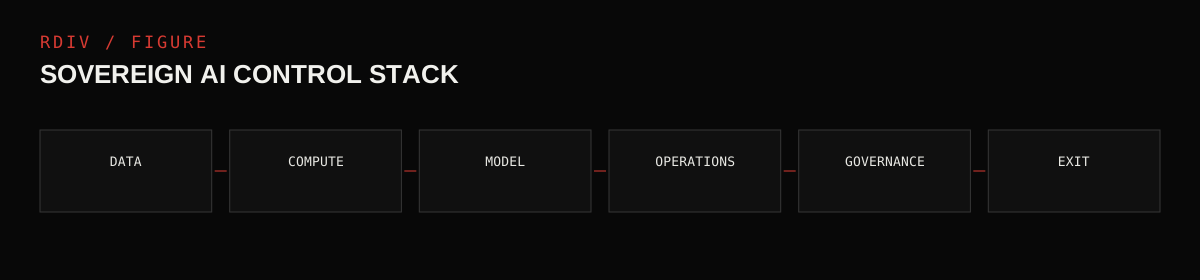
Sovereign AI concerns meaningful control over compute, data, models, operations, governance, continuity, and exit. Explore the RDIV control framework.
Fix the object first.
Sovereign AI is best treated as a control architecture rather than a single hosting choice. Data location matters, but so do access to compute, control over models and updates, operational authority, legal jurisdiction, continuity, and the practical ability to leave a provider without losing the function itself.
The visible label is not the whole system.
The concept matters because formal authority can remain with an institution while important technical dependencies migrate into infrastructure, models, vendors, or operating layers the institution cannot independently command. The governance question is therefore not only who signs the decision, but who can inspect, alter, suspend, replace, or continue the system that shapes the decision.
Trace the burden.
- Sovereign-AI language is now used across policy and industry, but definitions vary.
- NIST and GAO frameworks already emphasize governance, monitoring, accountability, and lifecycle controls.
- Federal acquisition guidance explicitly addresses interoperability, data portability, competition, and vendor dependency.
- There is no universal legal test for when an AI capability becomes “sovereign.”
- Control may be distributed across cloud, model, data, networking, energy, and operating vendors.
- The right balance between domestic capacity and cross-border/interoperable systems depends on the function and risk.
Where the work adds something.
The RDIV Sovereign Intelligence framework adds a command test: can the institution explain, audit, contest, suspend, replace, continue, and exit? It treats sovereignty as retained practical command rather than branding, geography, or formal ownership alone.