RDIV / ANSWER Q-001 · QUANTUM FOUNDATIONS
What Is the Quantum Measurement Problem?
A neutral explanation of the quantum measurement problem, definite outcomes, records, probabilities, interpretations, and the unresolved points of disagreement.
Fix the object first.
Linear quantum evolution applied to a system and measuring apparatus can produce entangled states containing components associated with different possible records. The foundational problem is how that formal structure connects to the definite empirical results and classical-looking records we use in practice.
The visible label is not the whole system.
The measurement problem sits at the boundary between a highly successful predictive formalism and competing accounts of what that formalism says about physical reality. It matters because proposed solutions make different commitments about dynamics, ontology, probability, and empirical testability.
Trace the burden.
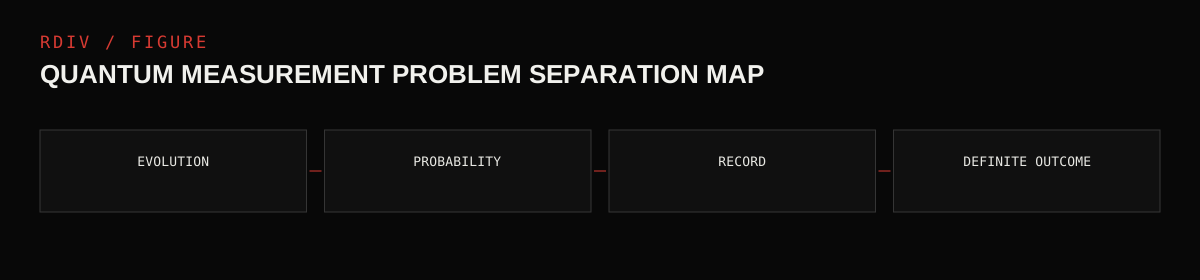
- The measurement problem is a recognized foundational issue.
- Different approaches reproduce observed quantum statistics while giving different accounts of measurement.
- Decoherence is central to understanding suppression of interference and classical records.
- There is no universally accepted interpretation or dynamical resolution.
- Different authors disagree about whether “definite outcome” requires an additional physical selection mechanism at all.
Where the work adds something.
CBR enters only after the mainstream problem is stated. It treats individual realization as a candidate law-target, but that is an RDIV proposal—not an established conclusion forced by quantum mechanics.