

Constraint-Based Realization
The Baseline Is Not The Problem
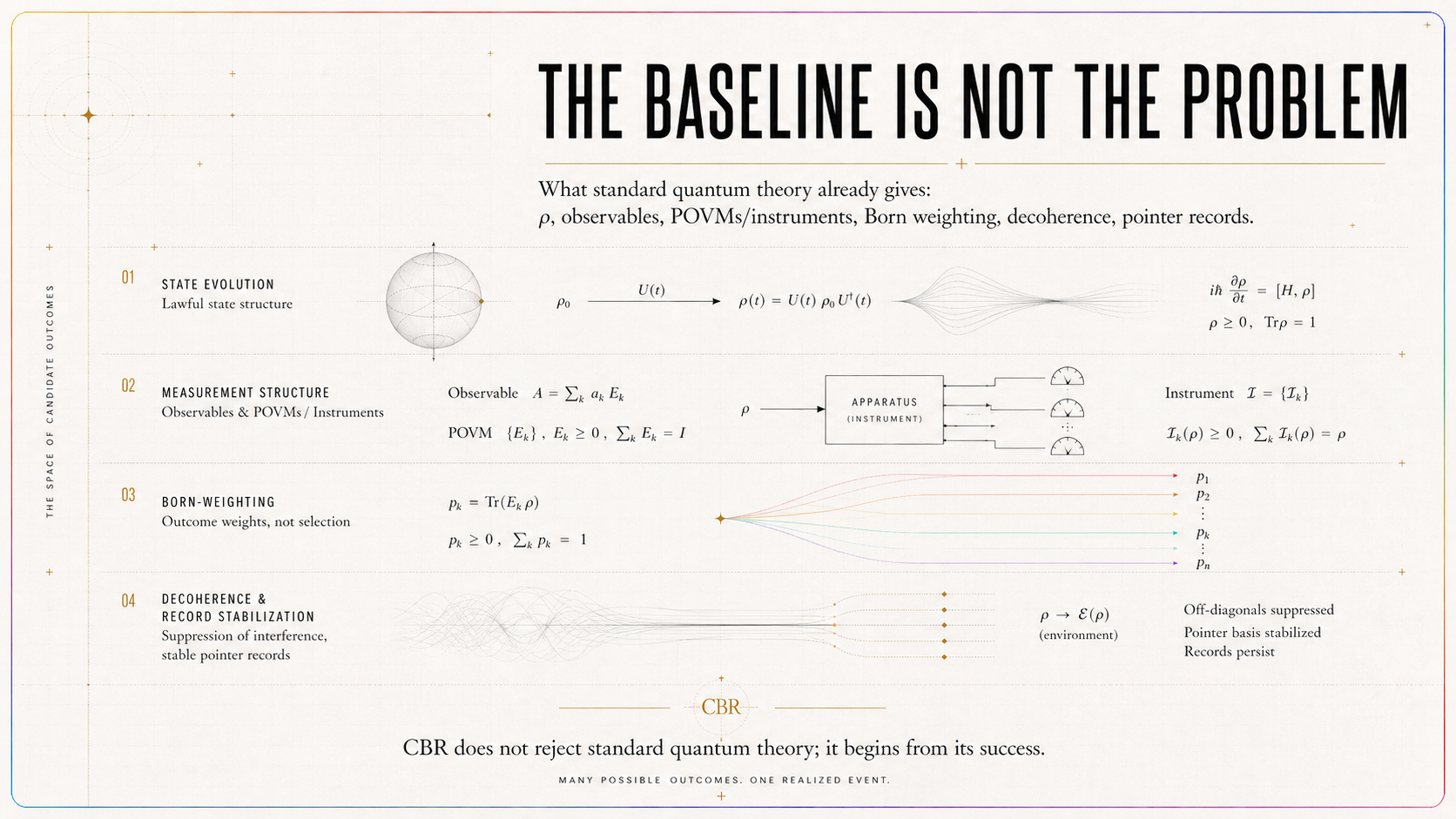
CBR begins from the strength of standard quantum theory, not from its dismissal. State evolution, observables, measurement structure, Born-rule weighting, decoherence, and record stabilization are treated here as real achievements. The CBR question arises only after those achievements are granted in full.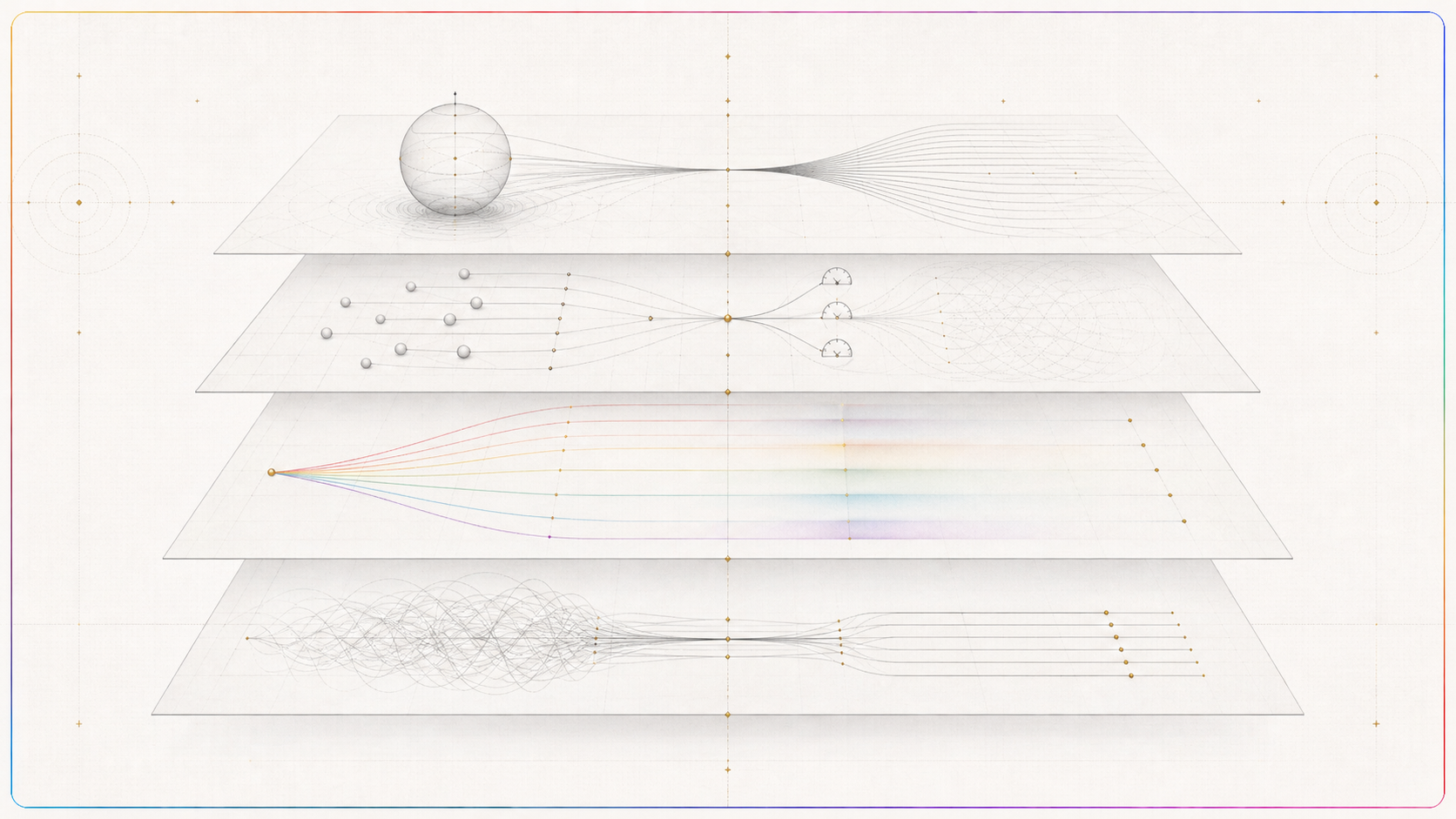
The Fourth Question
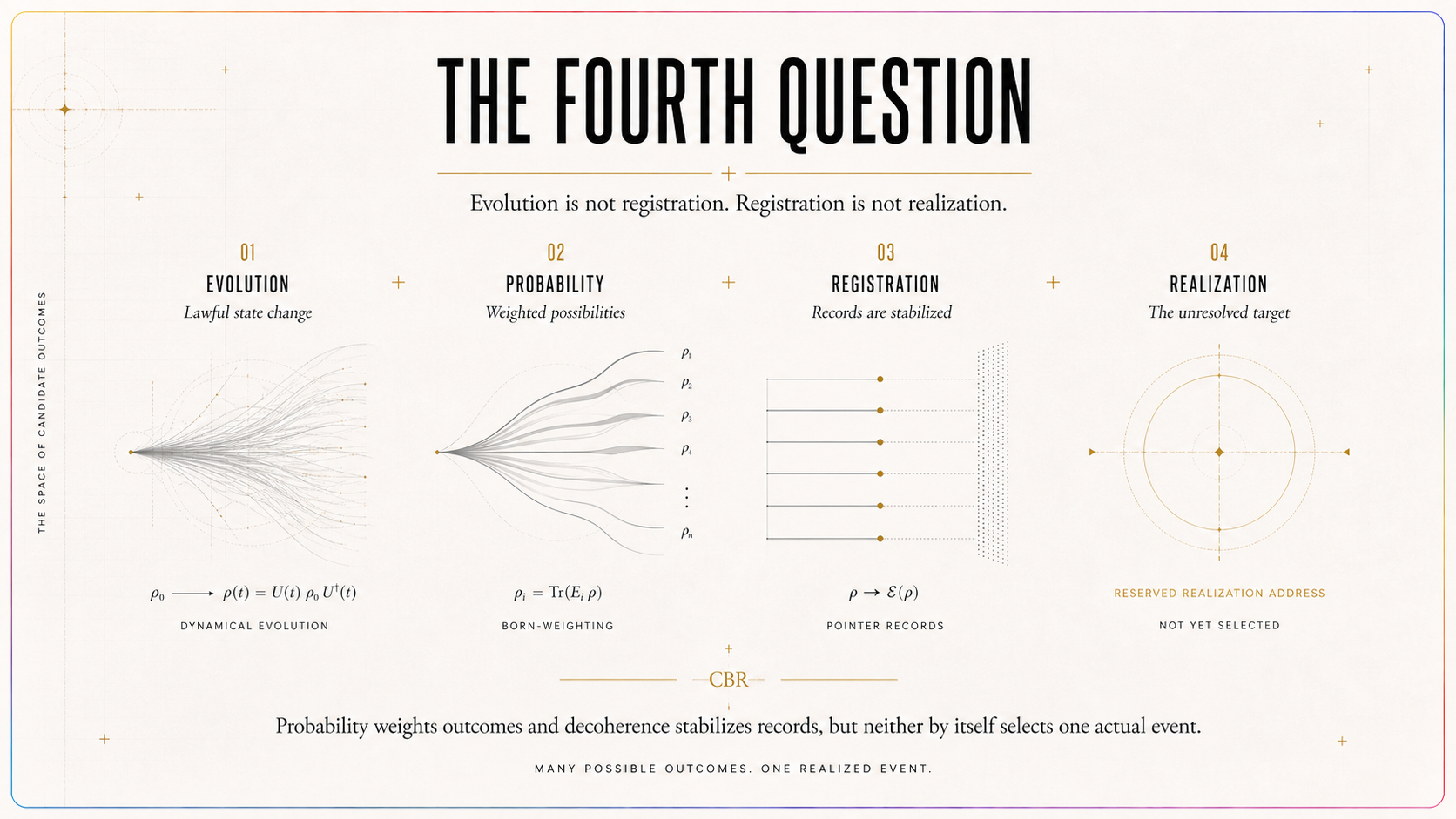
This slide isolates the unresolved target of the program. Evolution concerns how the state changes. Probability concerns how outcomes are weighted. Registration concerns how records form and stabilize. CBR asks the further question: which admissible outcome structure becomes actual? That is the fourth question.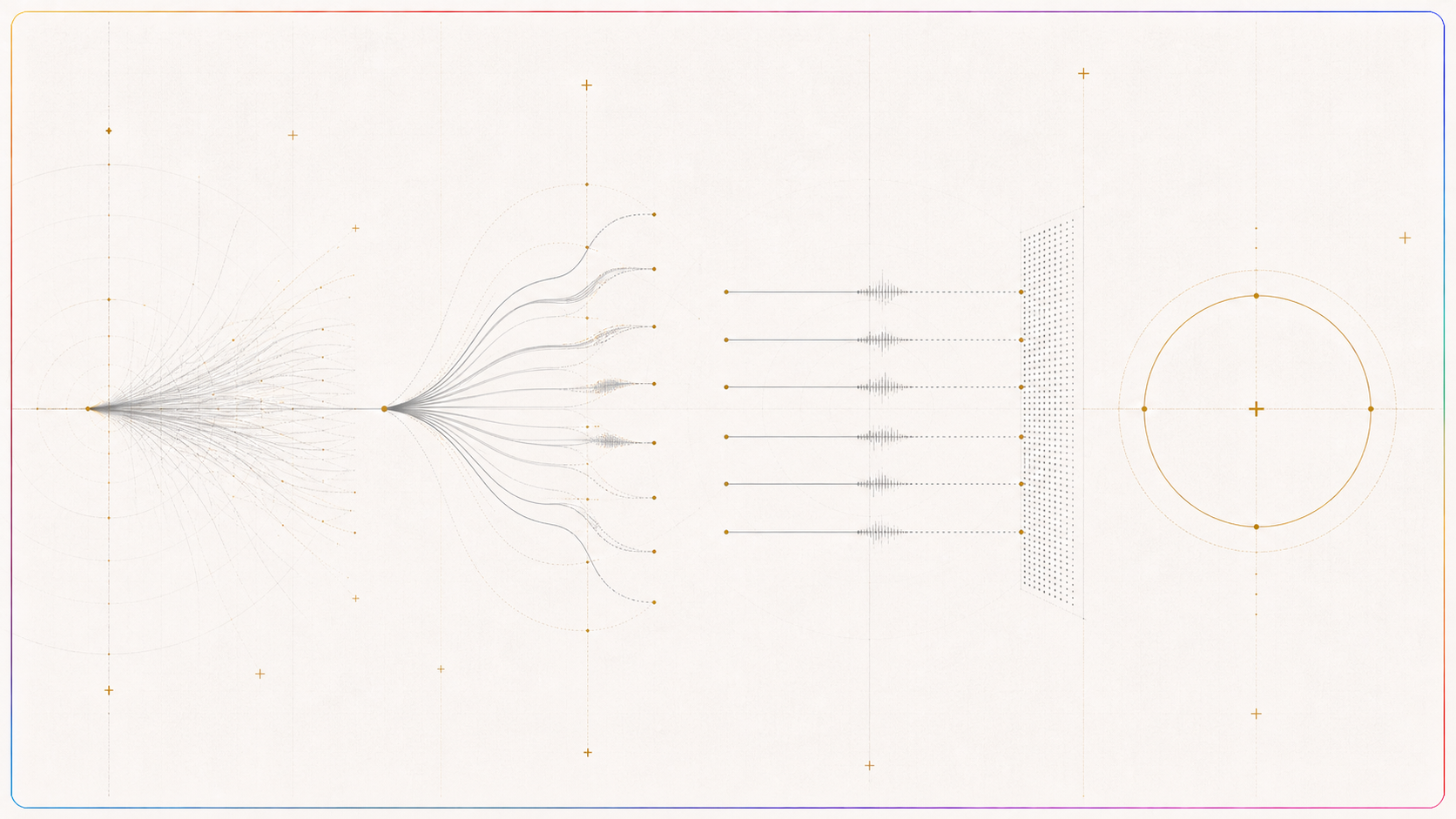
Realization As Constrained Selection
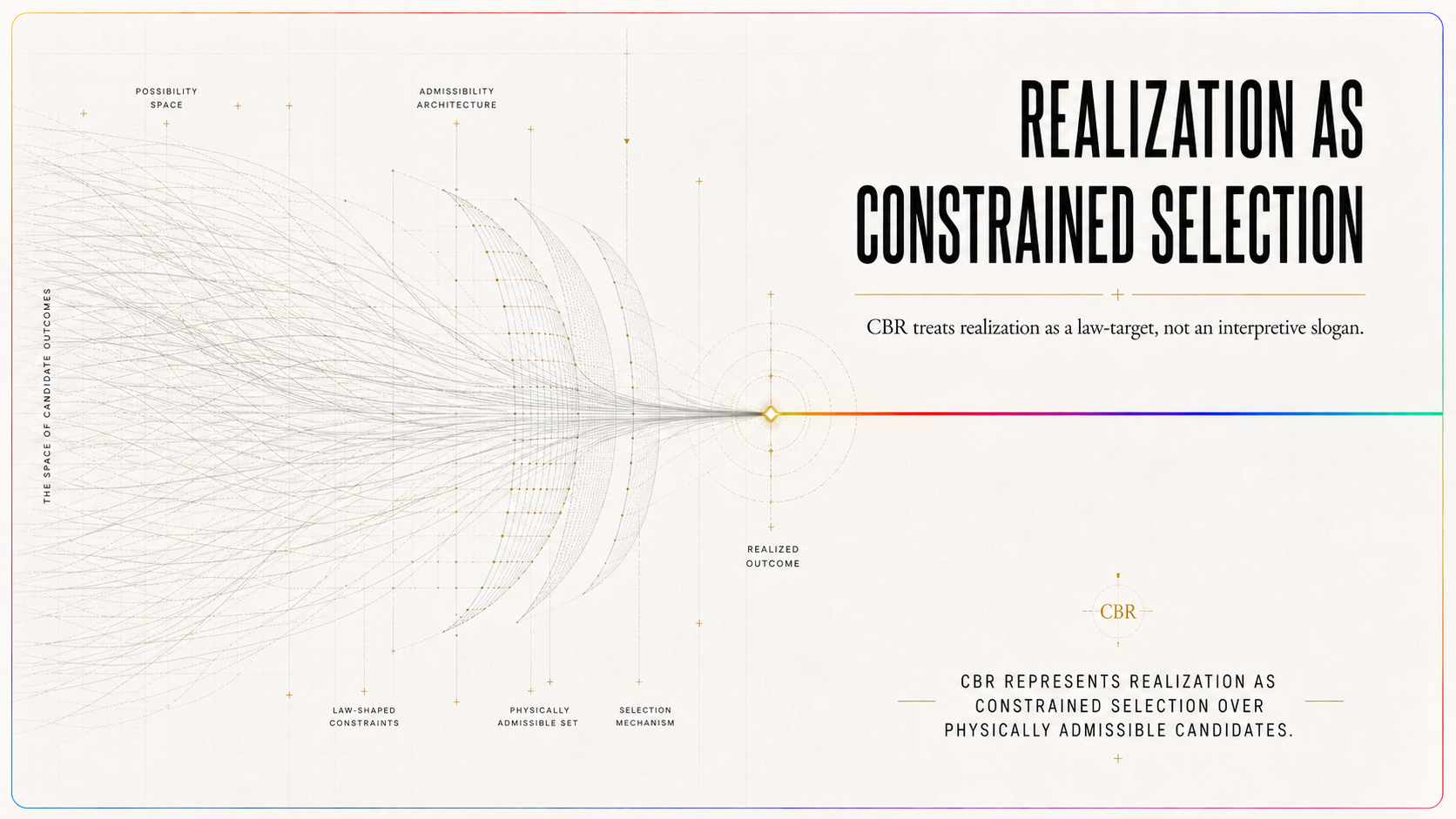
Here the core move of CBR appears in conceptual form. Realization is treated as constrained selection over physically admissible candidates. The claim is not that reality selects from unrestricted formal possibility. The claim is that one admissible structure may be selected under law-governed constraint.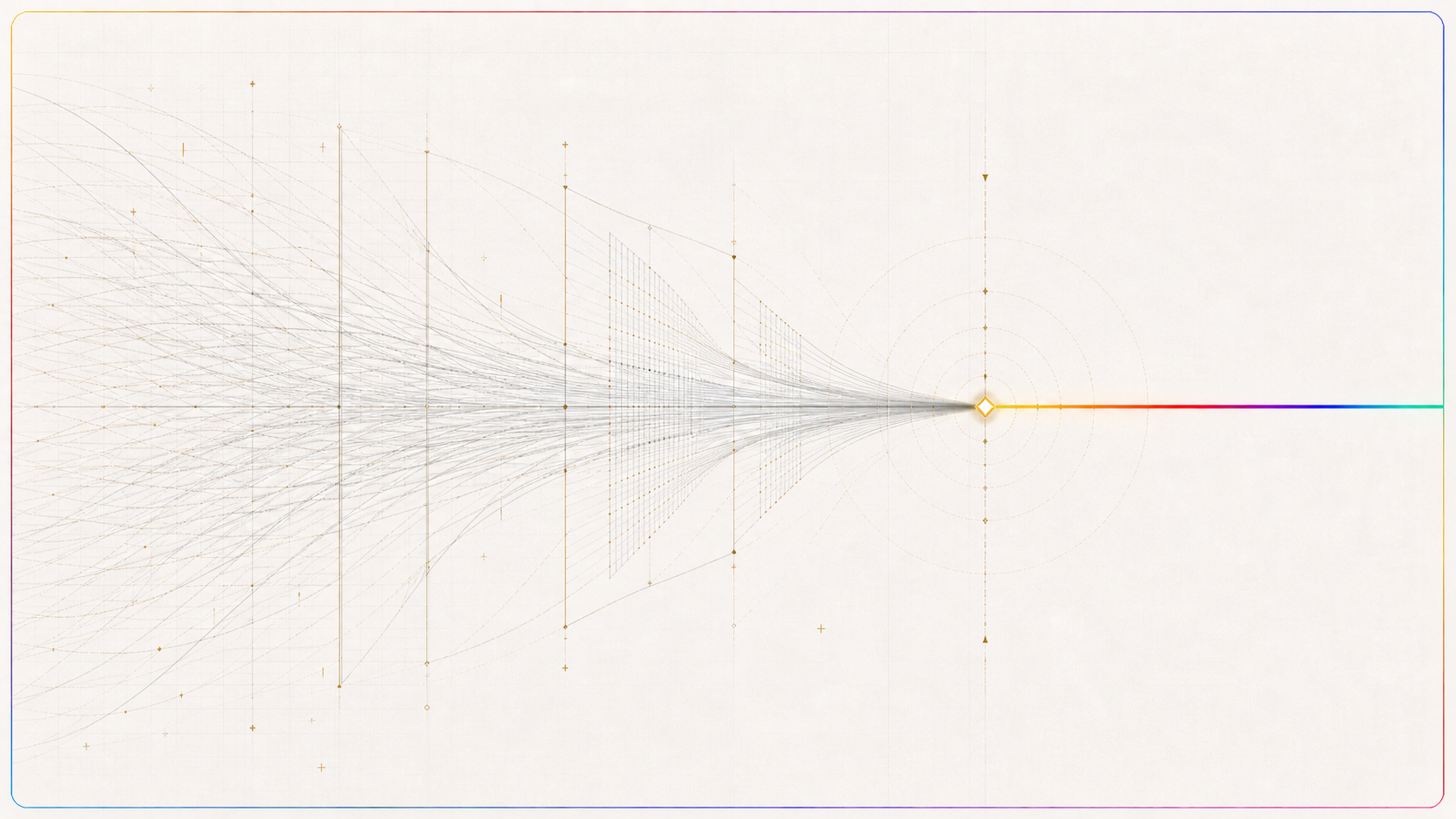
Context FIrst
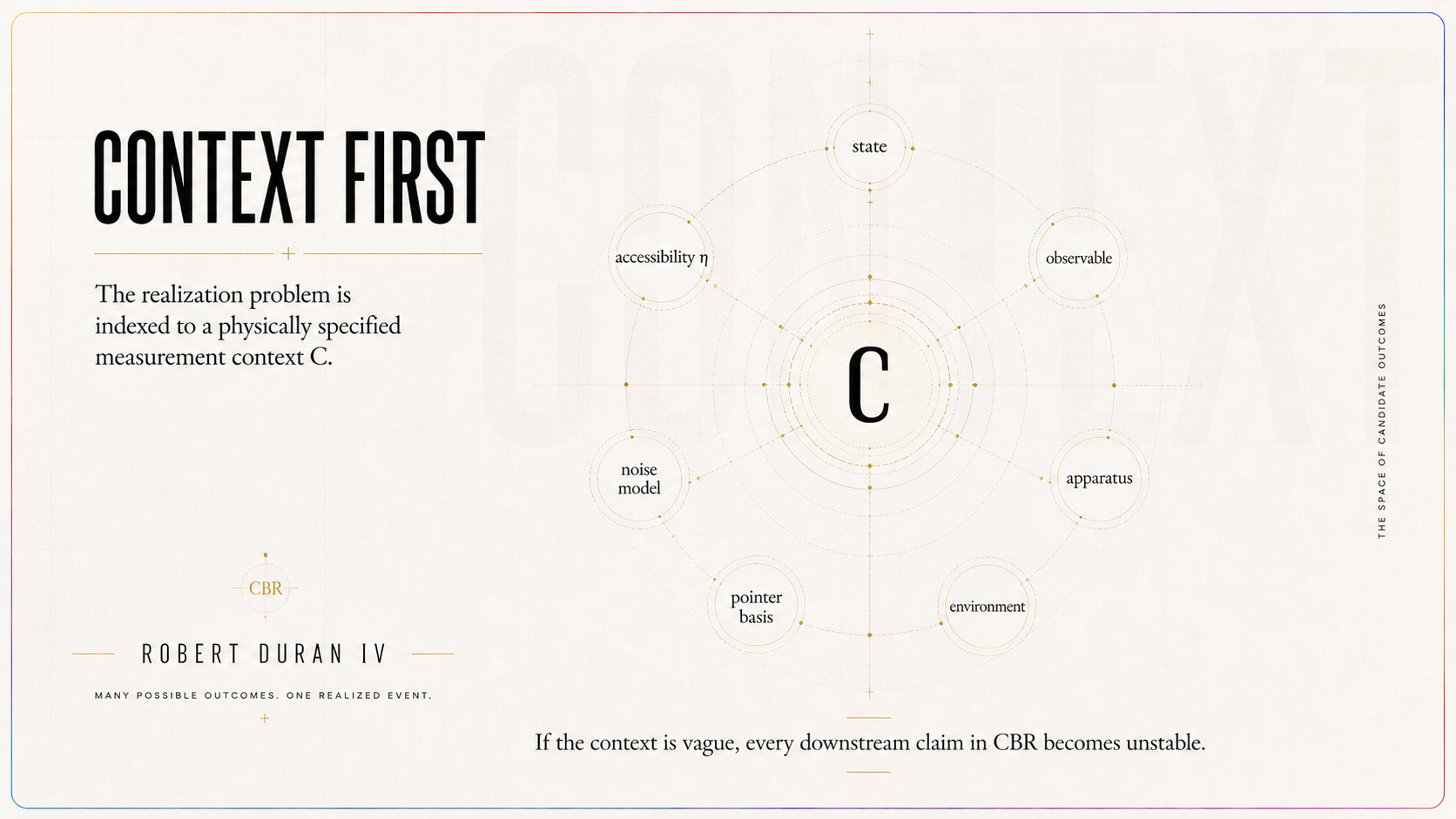
CBR is indexed to a physically specified measurement context C. State, observable, apparatus, environment, pointer structure, noise model, and accessibility conditions are not background decoration. They define the domain in which the realization problem is posed. If context is vague, everything downstream becomes unstable.
The Admissible Class
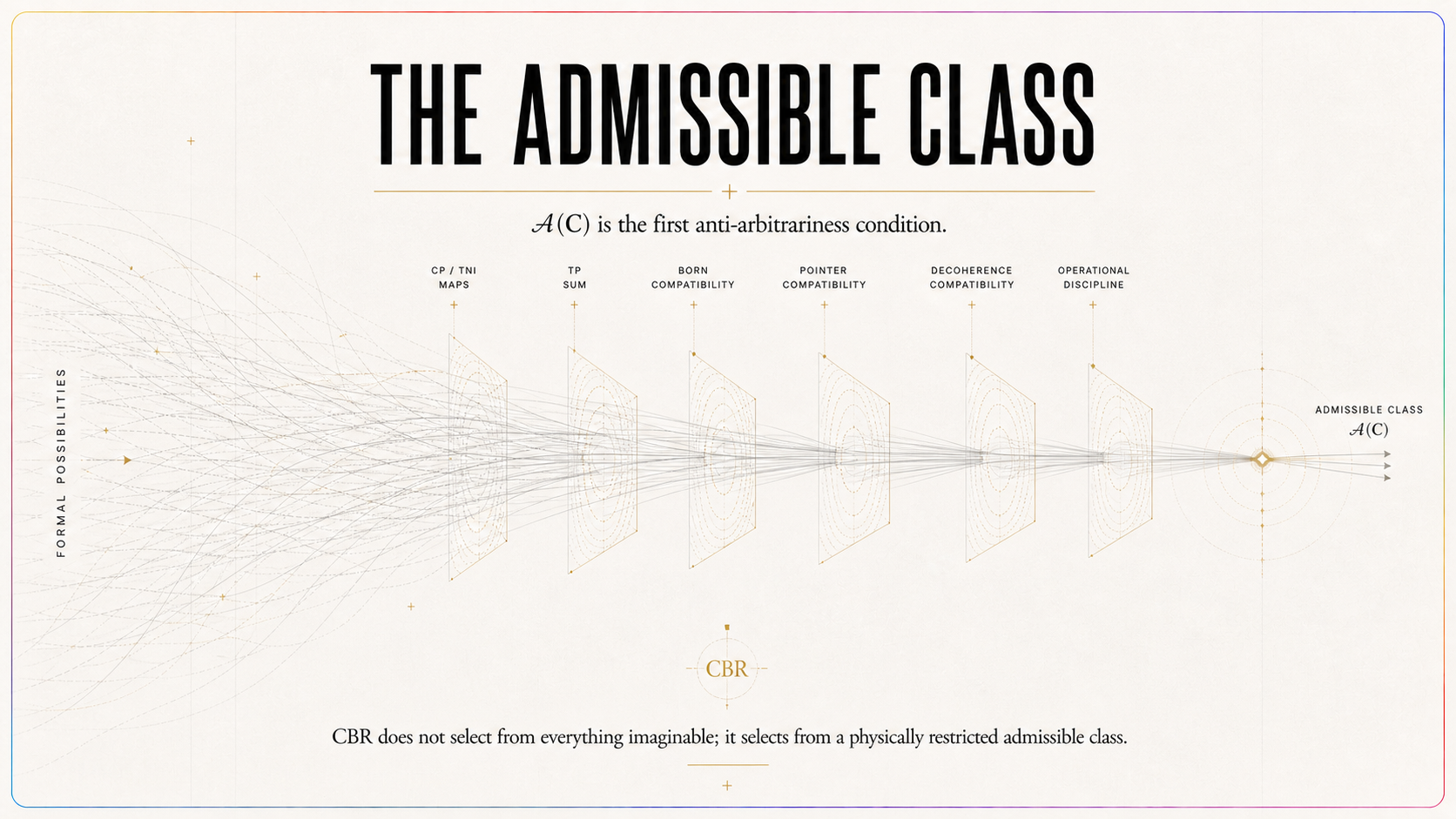
This slide presents 𝒜(C) as the first anti-arbitrariness condition in the framework. CBR does not select from everything that can be formally written down. It selects only from a context-restricted admissible class shaped by physical compatibility, operational discipline, and the structure of the measurement setting itself.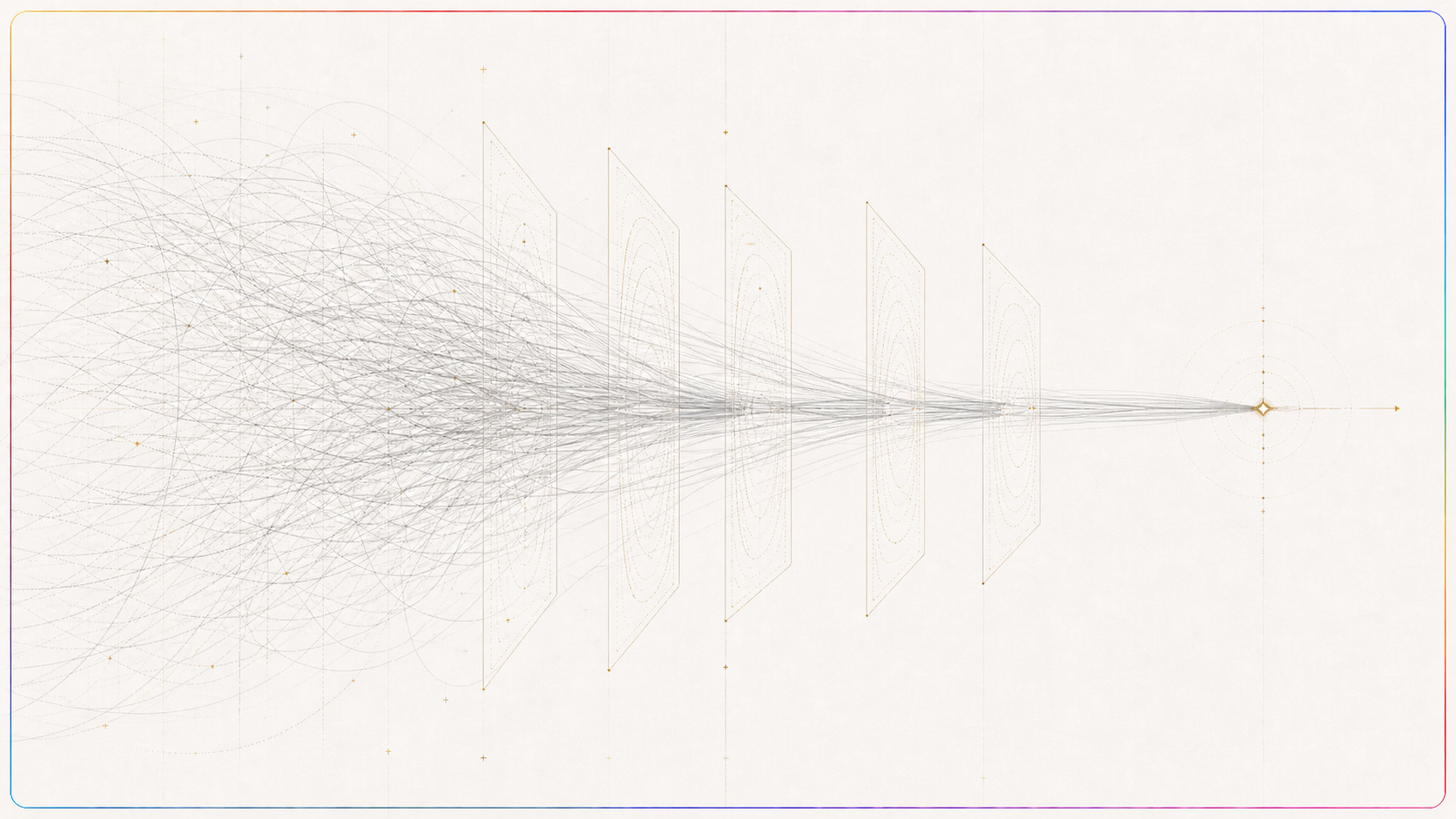
The Simplest Test Case
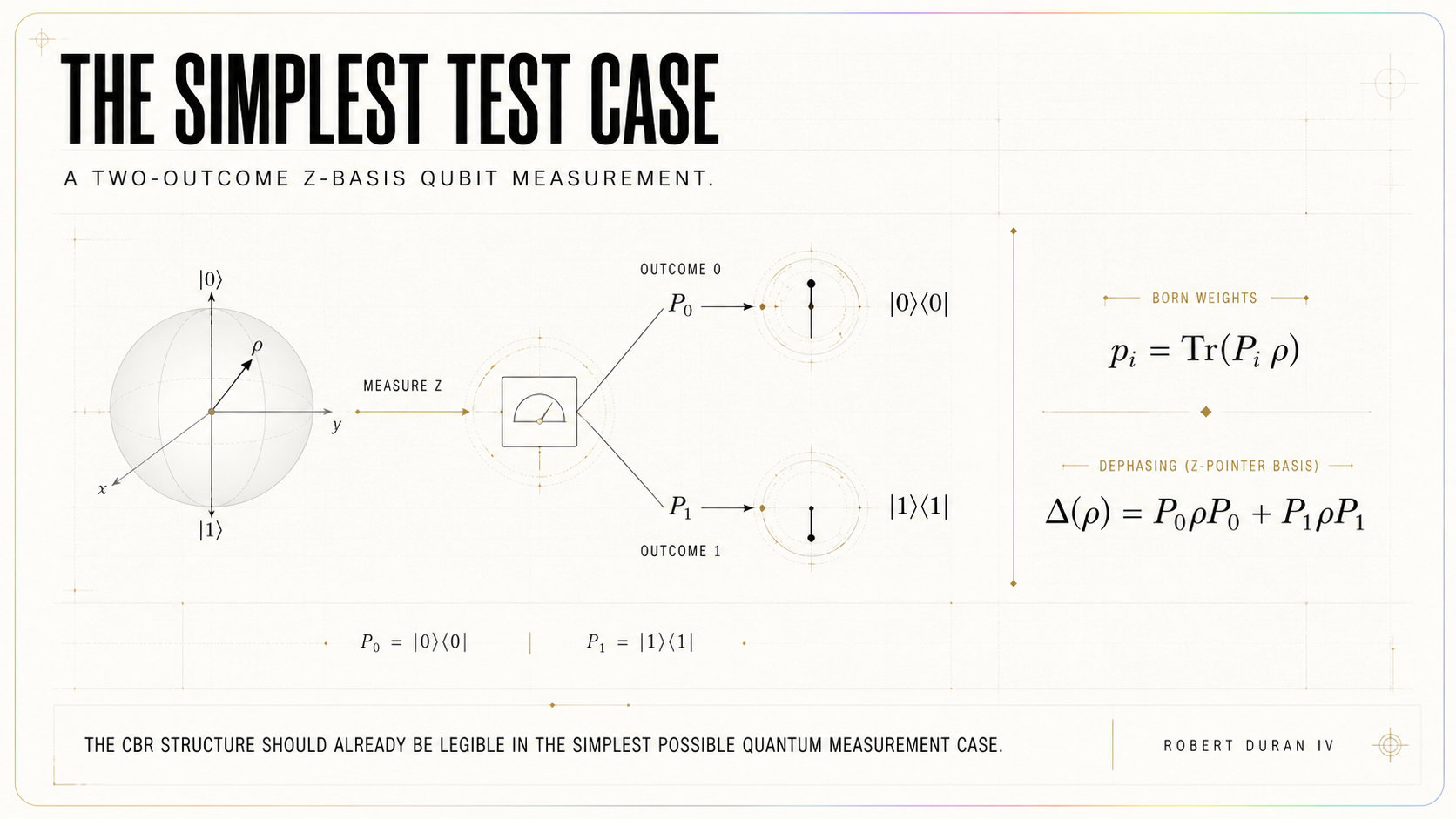
The deck then turns to a minimal quantum case: a two-outcome Z-basis qubit measurement. The purpose is methodological. A candidate law-form should already be legible in the simplest possible setting. If the structure cannot be stated cleanly there, it is not ready to claim general form.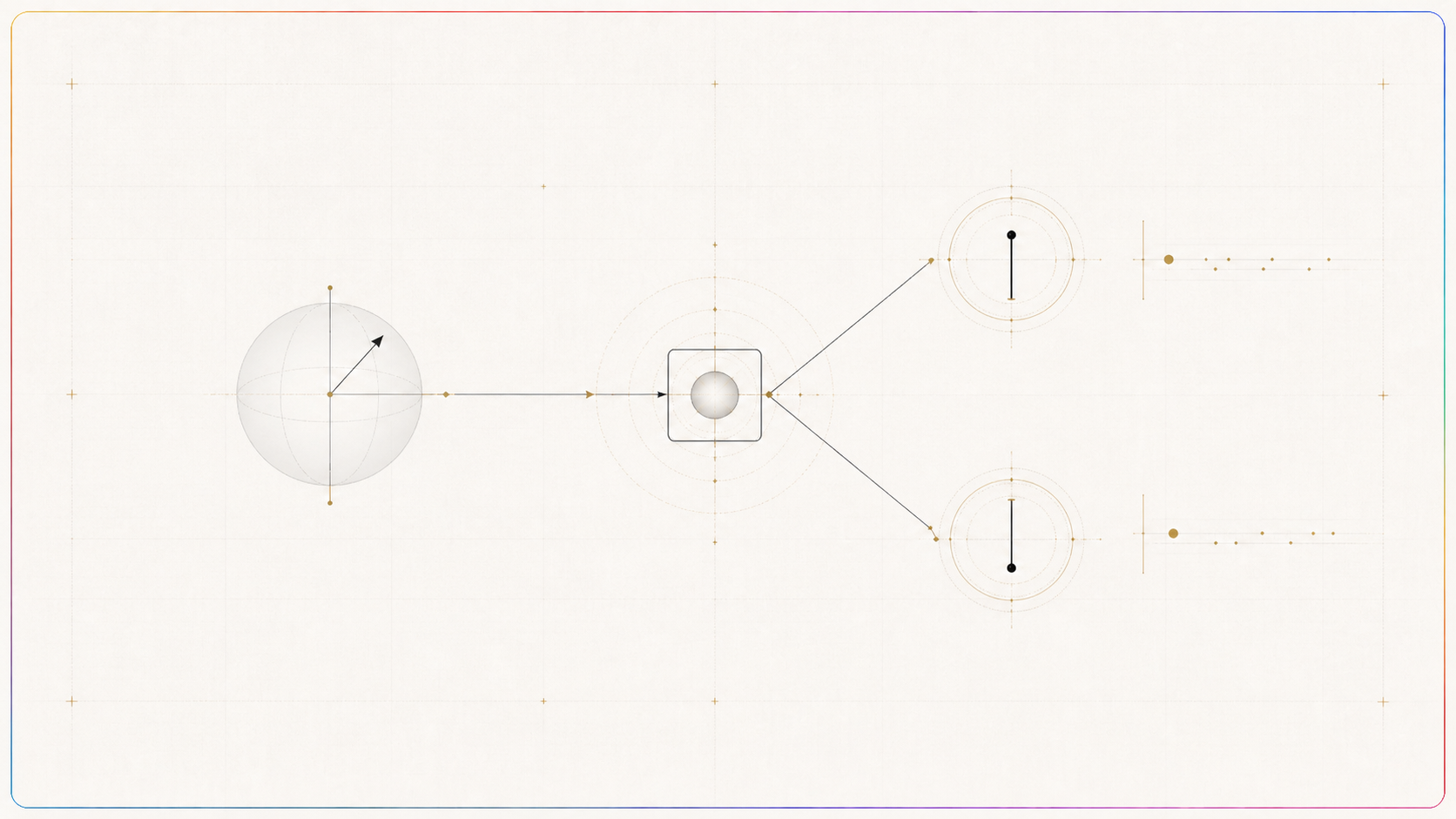
What ℛ_C Does
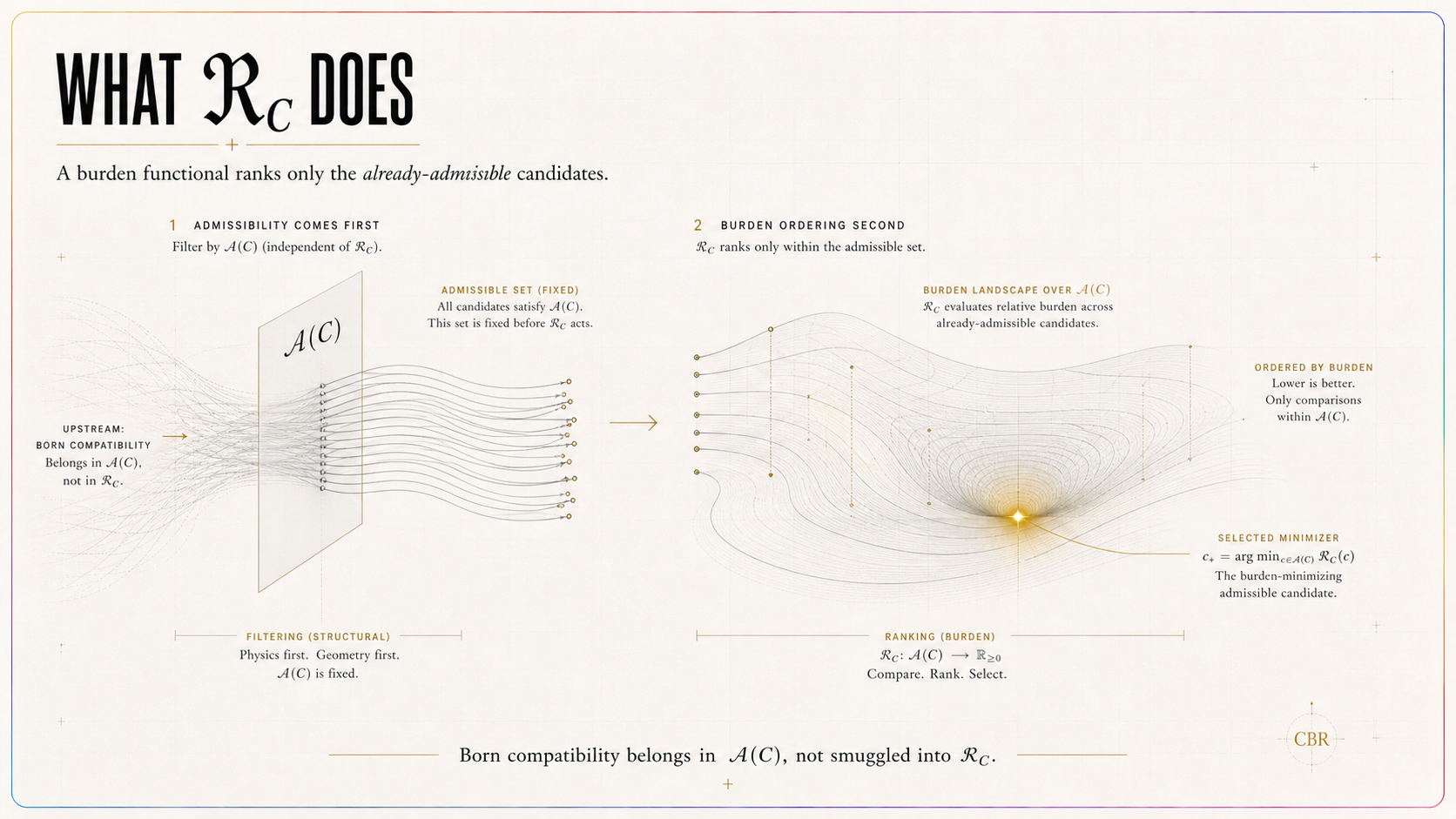
This slide clarifies the role of the realization-burden functional ℛ_C. It does not generate the admissible class, and it does not secretly replace Born weighting. Its role is narrower and sharper: to rank only the already-admissible candidates within a fixed context. That distinction is part of the framework’s internal discipline.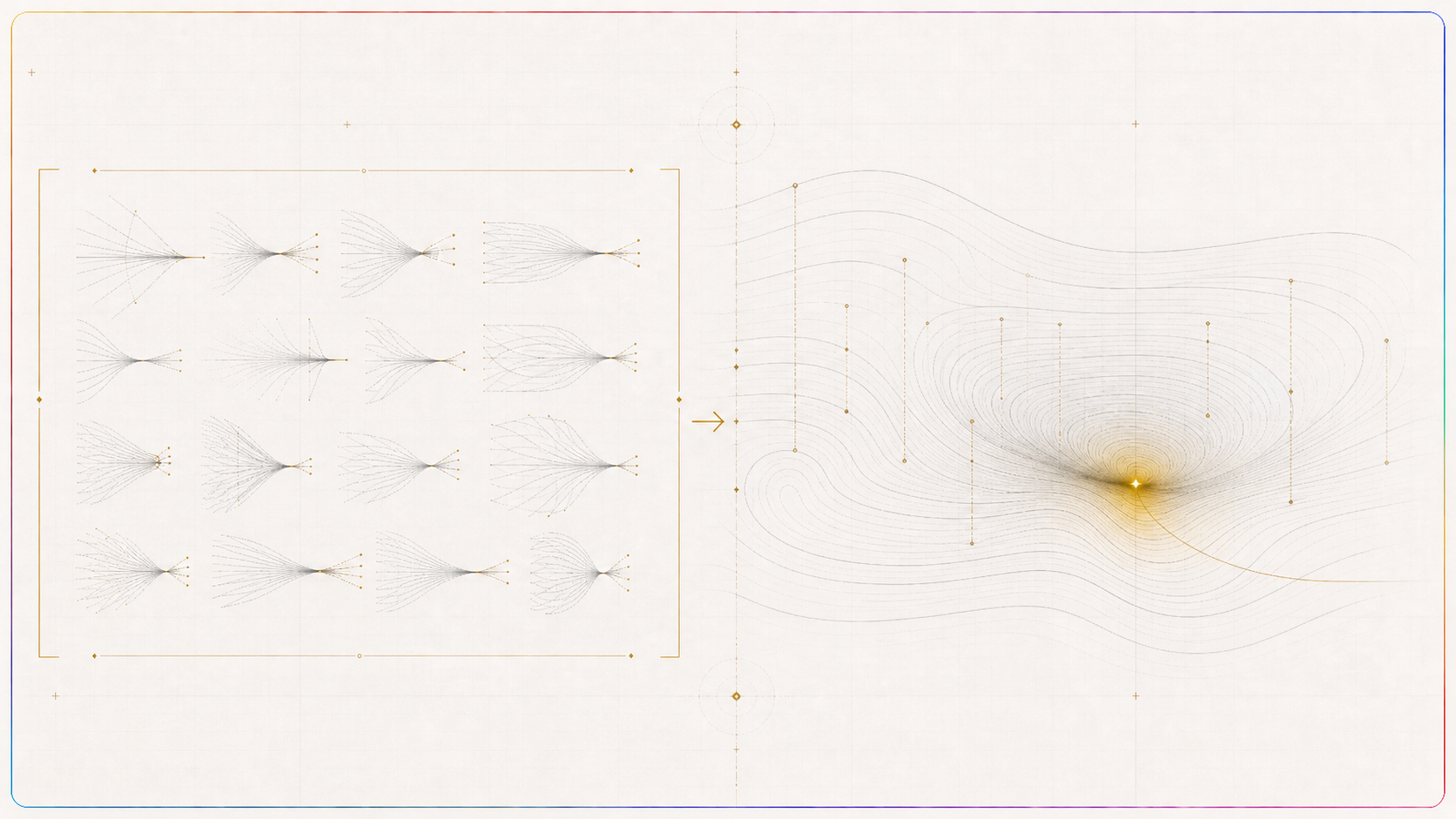
The Selection Rule
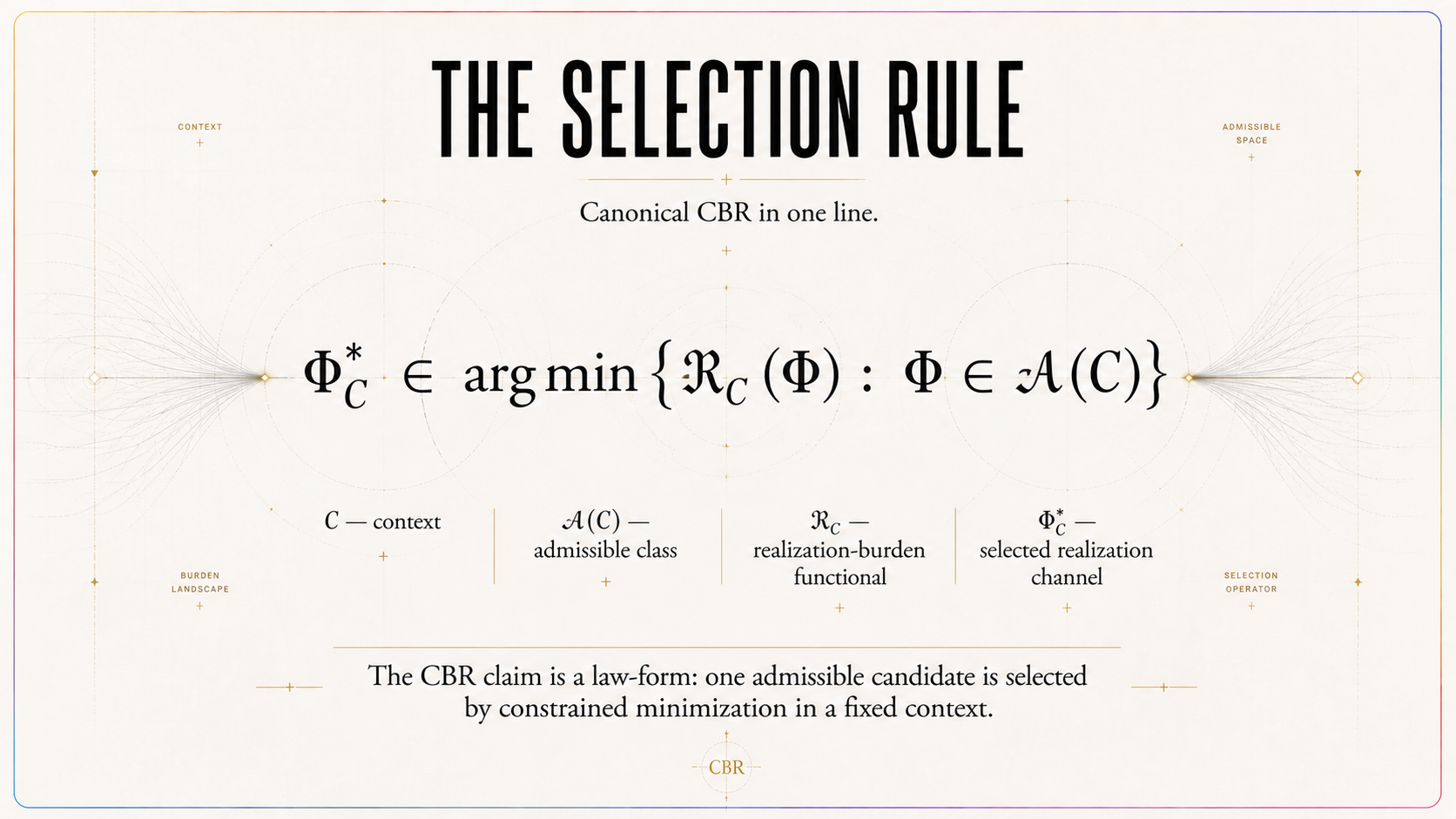
Here the canonical law-form is stated in one line:
Φ∗_C ∈ argmin{ℛ_C(Φ) : Φ ∈ 𝒜(C)}.
This is the formal heart of canonical CBR: one admissible candidate is selected by constrained minimization within a fixed realization context.
Unique Up to Operational Equivalence
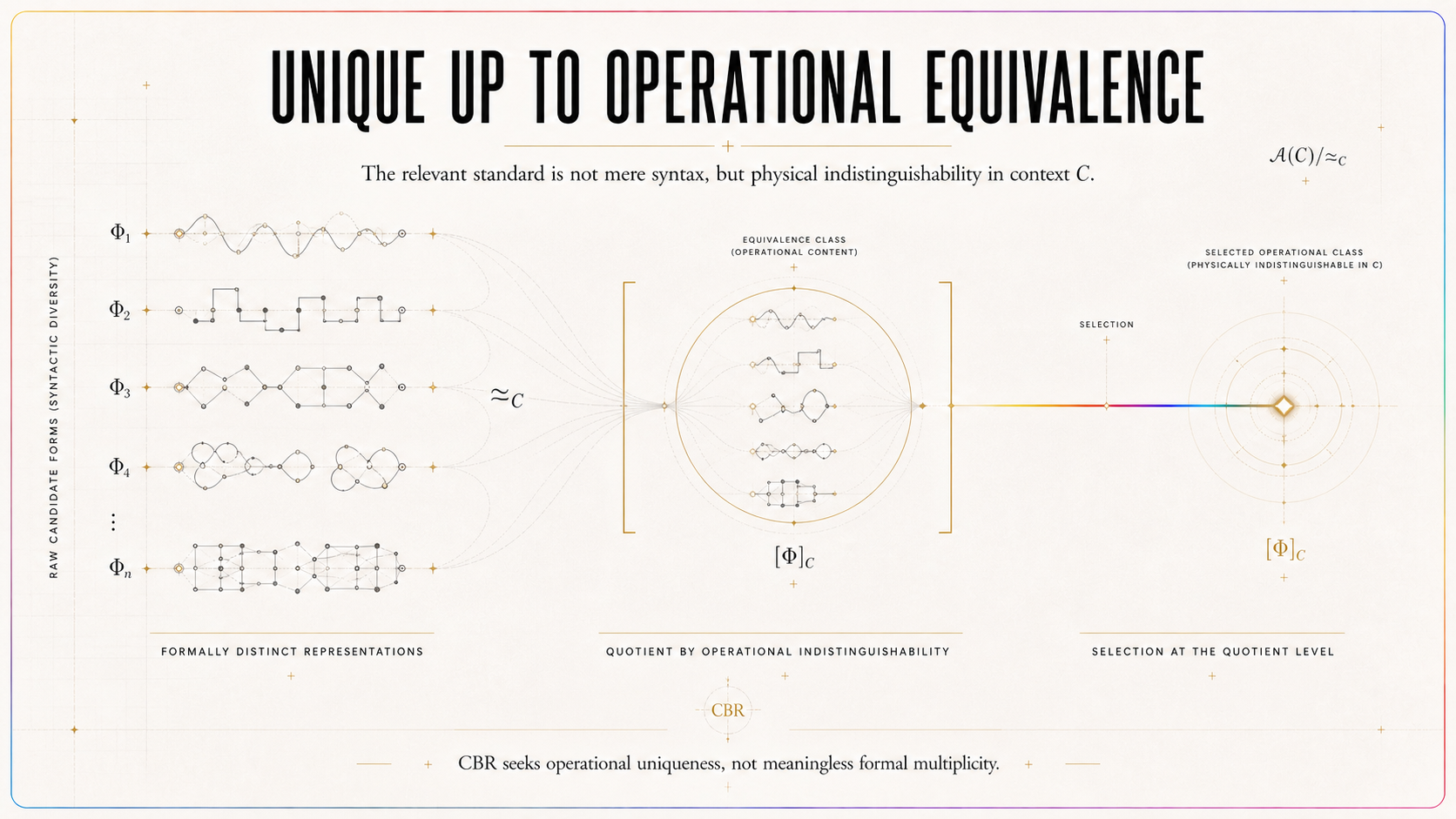
CBR does not require uniqueness at the level of notation alone. The relevant standard is operational uniqueness in context C. Formally distinct candidates that are physically indistinguishable should not count as genuinely different realizations. That is why operational equivalence is part of the canonical structure, rather than an afterthought.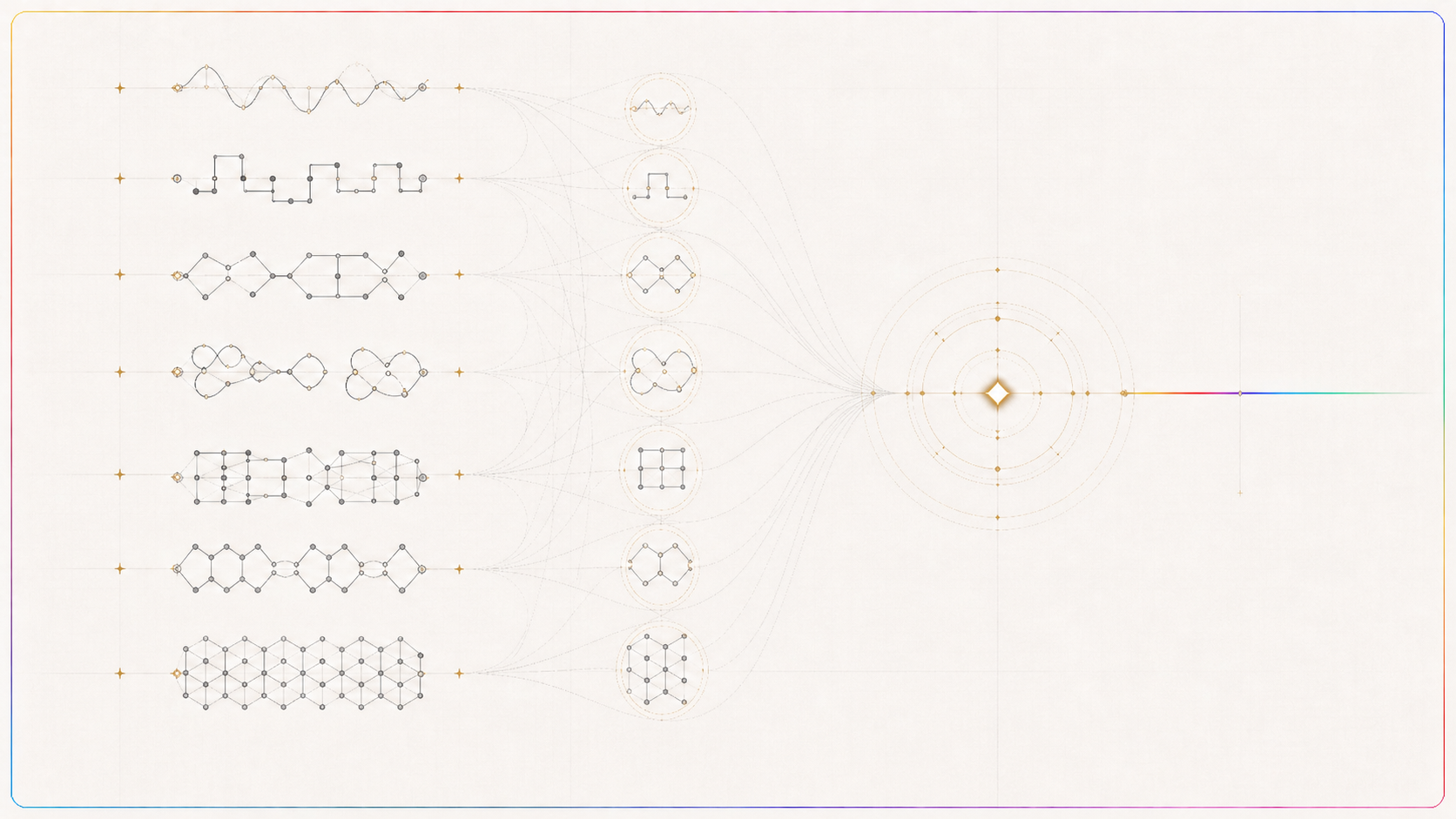
What CBR Adds — And What It Does Not
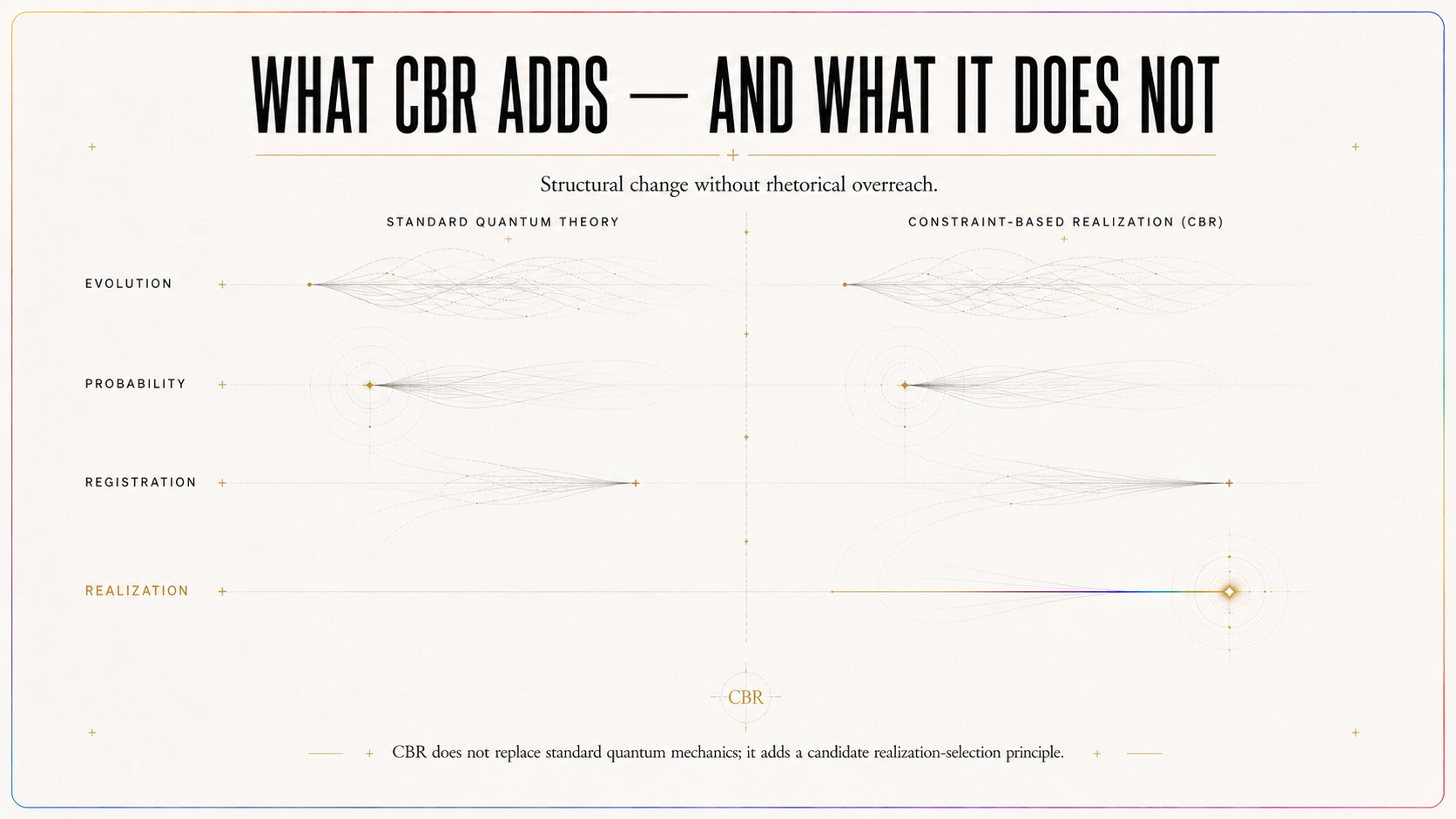
This slide states the scope of the program with precision. CBR does not replace standard quantum mechanics, deny the Born rule, or reject decoherence. Its narrower claim is that realization may be a distinct law-target beyond evolution, probability, and record stabilization. The addition is structural, not rhetorical.
Where Empirical Content Enters
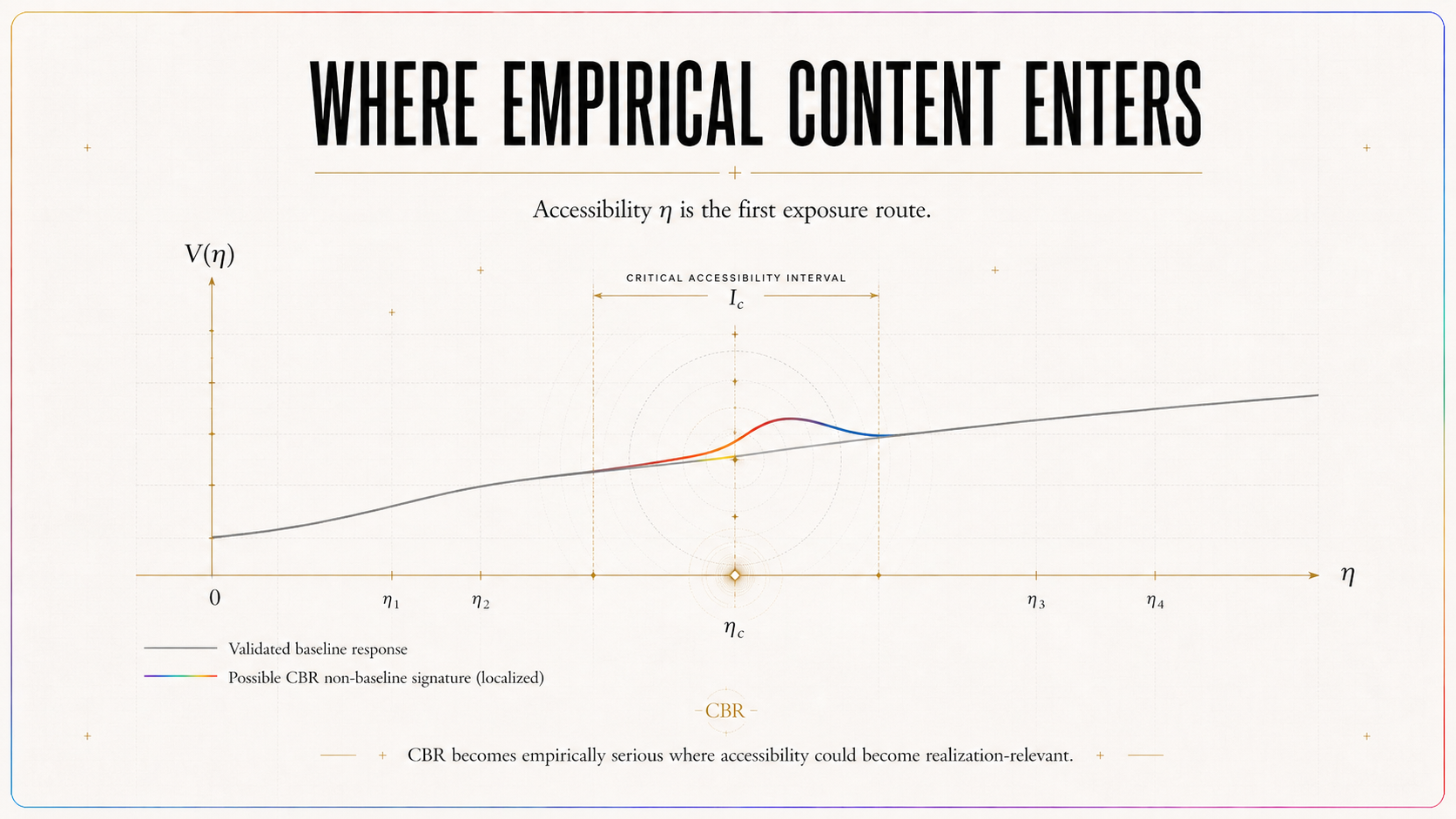
The empirical side of the program begins where accessibility could become realization-relevant. By varying an operational accessibility parameter η and examining a response such as V(η), CBR proposes a route by which a registered model could either display a non-baseline signature near a declared critical regime or fail against a validated baseline.Registered Model Must Be Able to Fail
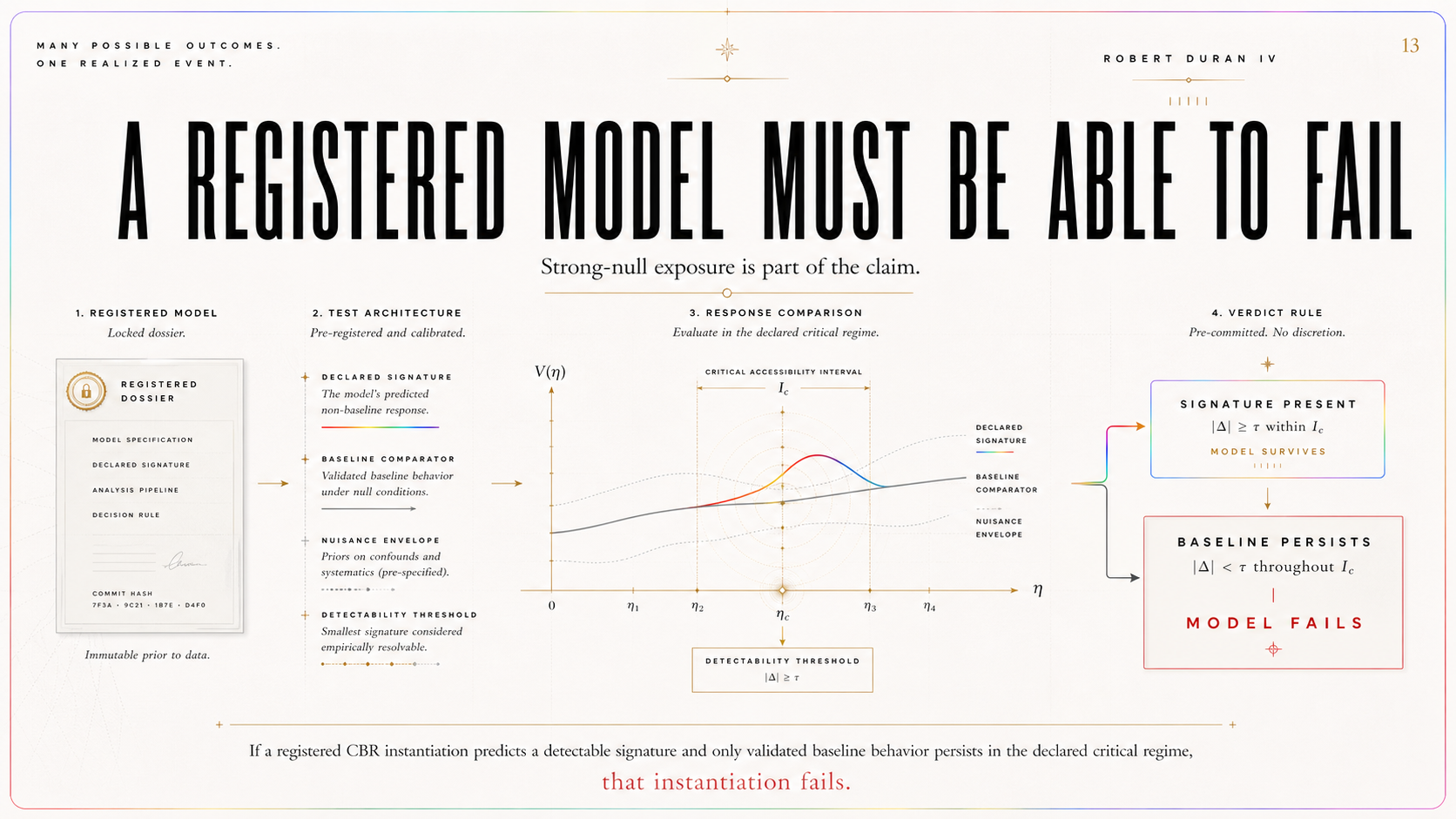
This slide states one of the strongest commitments in the entire program: a registered CBR instantiation must be vulnerable to failure. If it predicts a detectable accessibility-sensitive signature and validated baseline behavior persists across the declared critical regime, that registered instantiation fails. CBR is not asking to be protected as interpretation.The Correct Question
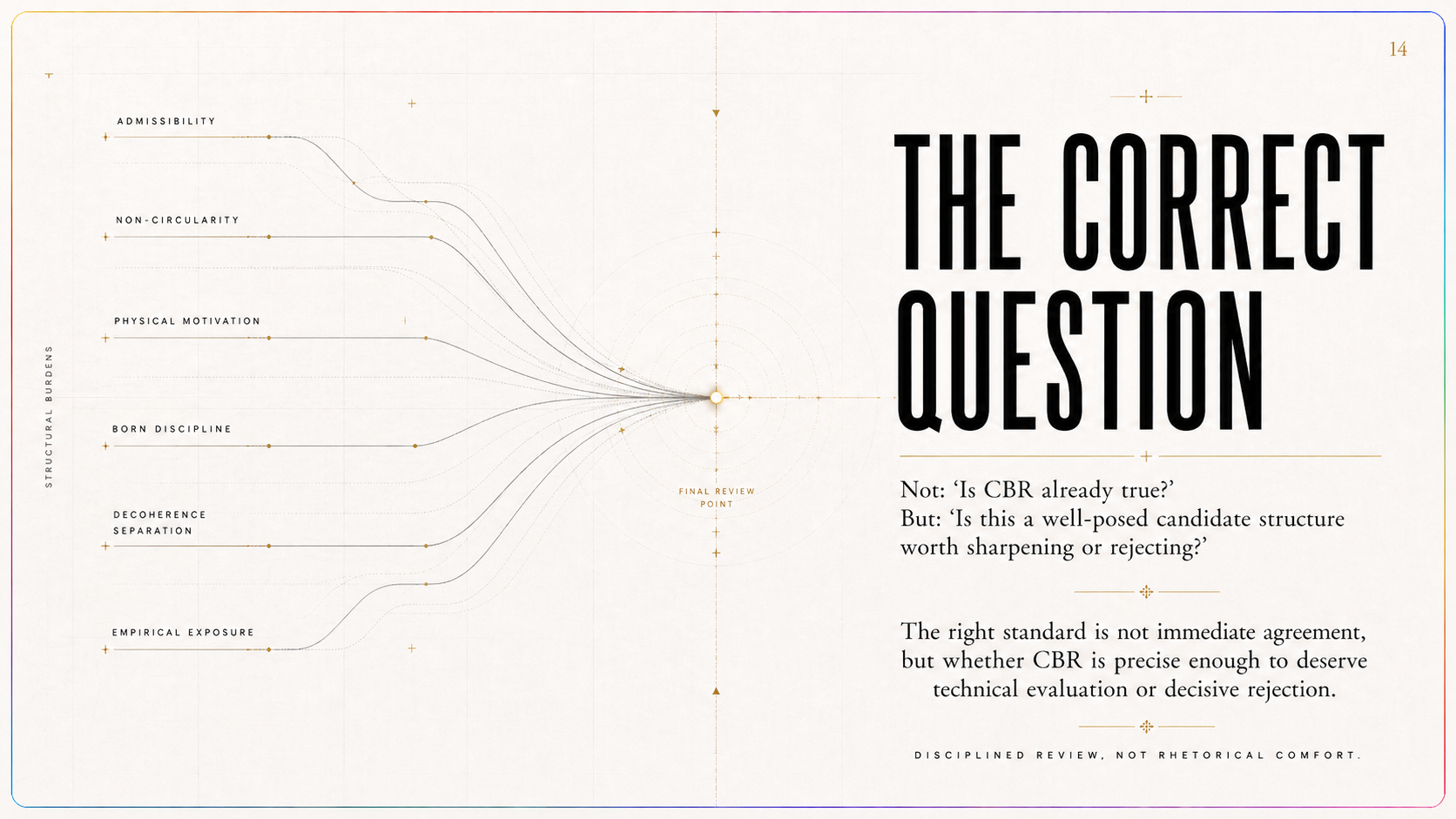
The sequence closes by fixing the correct standard of review. The question is not whether CBR has already been established as true. The question is whether it is a sufficiently precise, non-circular, technically disciplined candidate structure to deserve deeper sharpening or decisive rejection. That is the right burden. That is the right question.